
Flexible PVC Liners vs. Epoxy Coatings for Tanks
Flexible PVC liners and epoxy coatings are two common solutions for protecting industrial tanks from corrosion, leaks, moisture intrusion, and chemical exposure. While epoxy coatings bond directly to tank surfaces, flexible PVC liners create a physical containment barrier that can simplify maintenance, reduce downtime, and extend the service life of aging tanks in many industrial applications.
Understanding Tank Protection Systems
Water, chemicals, temperature fluctuations, abrasion, and environmental conditions constantly wear industrial tanks. Over time, these factors can lead to corrosion, leaks, cracking, and structural deterioration.
To protect tanks and extend their lifespan, facilities often turn to protective lining systems. Two of the most widely used options are epoxy coatings and flexible PVC liners.
Although both solutions are designed to improve containment and reduce damage, they function in very different ways and offer unique advantages depending on the application.
Contact Us Today!

What Are Epoxy Tank Coatings?
Epoxy coatings are liquid-applied protective coatings that bond directly to the interior surface of a tank. Once cured, the coating forms a hard protective layer designed to resist corrosion, moisture, and chemical exposure.
Epoxy systems are commonly used in:
- Water storage tanks
- Wastewater systems
- Concrete tanks
- Steel tanks
- Chemical process tanks
- Industrial containment structures
Because epoxy coatings adhere directly to the substrate, surface preparation is one of the most important parts of the installation process. Tanks often need to be cleaned, dried, blasted, or mechanically prepared before coating application begins.
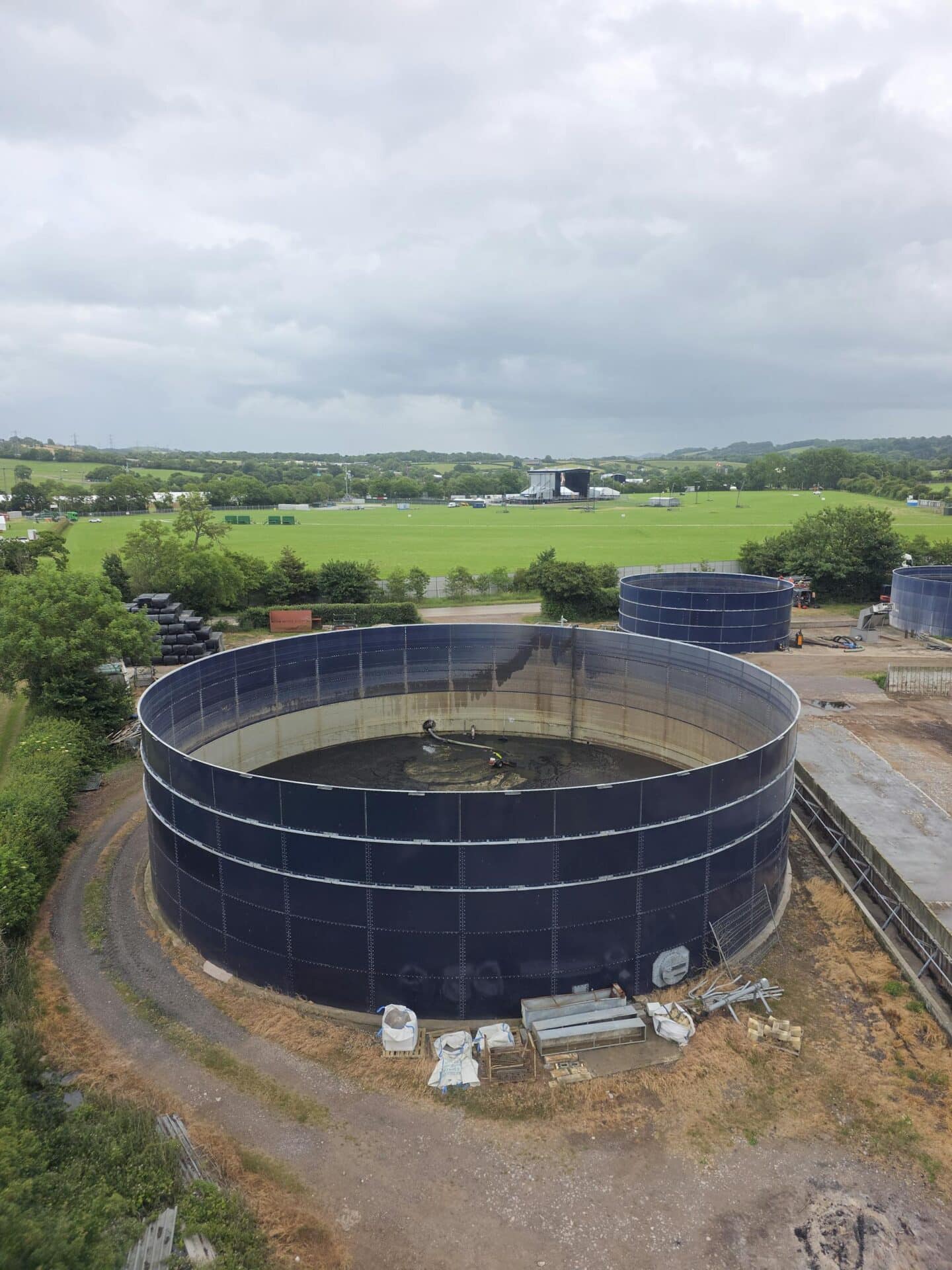
Advantages of Epoxy Coatings
Epoxy coatings remain a widely used tank protection solution for several reasons:
- Strong adhesion to properly prepared surfaces
- Seamless protective finish
- Good corrosion resistance
- Effective chemical protection in many applications
- Suitable for structurally sound tanks
- Lower upfront costs in some smaller projects
For facilities with tanks that are in good structural condition, epoxy coatings can provide reliable protection and extend the usable life of the tank.
Limitations of Epoxy Coatings
Like any containment solution, epoxy coatings also have limitations.
Because the coating bonds directly to the tank surface, any substrate movement, moisture intrusion, or improper preparation can affect long-term performance. Over time, coatings may experience:
- Cracking
- Peeling
- Blistering
- Adhesion failure
Repairing damaged coating systems may also require draining the tank, preparing the surface again, and re-coating affected areas. In some facilities, this can lead to increased downtime and maintenance costs.
Quality-First Manufacturing
We manufacture each one of our liners with the strongest materials, resulting in a longer lifespan. The liner itself is strong enough to protect the container, while being resistant to chemical corrosion. Providing a complete solution for a variety of industries.
What Are Flexible PVC Tank Liners?
Flexible PVC liners are fabricated membrane systems installed inside tanks to create a protective containment barrier between stored materials and the tank structure itself.
Unlike epoxy coatings, PVC liners do not rely on bonding directly to the tank surface. Instead, they function as an independent lining system that protects the underlying tank from corrosion, leaks, and chemical exposure.
Flexible PVC liners are commonly used in:
- Concrete tanks
- Steel tanks
- Wastewater tanks
- Potable water systems
- Fertilizer storage tanks
- Chemical containment applications
- Lagoons and pits
- Secondary containment systems
Many liner systems are custom-fabricated to match the dimensions and operational requirements of the tank.

Advantages of Flexible PVC Liners
Flexible PVC liners offer several operational and maintenance advantages for industrial facilities.
Reduced Surface Preparation Requirements
Because the liner functions apart from the substrate, installation may require less extensive surface preparation compared to epoxy coatings. This can simplify rehabilitation projects for aging or deteriorated tanks.
Faster Installation and Reduced Downtime
Many PVC liners are prefabricated before arriving on site, which can help reduce installation time and speed up return-to-service schedules.
For facilities where downtime impacts operations, this can be a major advantage.
Strong Chemical and Corrosion Resistance
PVC liners are designed to resist a wide range of chemicals, moisture exposure, and corrosive environments. The liner acts as a physical barrier that isolates the tank structure from the stored contents.
Repairability and Maintenance
If damage occurs, many liner systems can be repaired locally without requiring full re-coating of the tank interior. This can simplify long-term maintenance planning.
Long-Term Tank Protection
Flexible liners are often used in tank rehabilitation projects because they can help protect aging infrastructure while extending operational life.
Potential Drawbacks of Flexible PVC Liners
Flexible PVC liners also have considerations that facilities should evaluate before selecting a containment system.
- Sharp objects or aggressive abrasion can damage liner materials
- Proper fabrication and seam welding are critical for performance
- Some applications may require customized anchoring systems
- Extremely high-temperature environments may require alternative materials depending on operating conditions
However, many industrial-grade PVC liner systems are designed for demanding environments. Some thicker PVC liners can operate in temperatures up to 170°F, depending on the specific application and liner configuration.
Flexible PVC Liners vs. Epoxy Coatings: Key Differences
While both systems provide tank protection, the biggest difference is how they interact with the tank itself.
Epoxy coatings bond directly to the tank surface. Flexible PVC liners create a separate containment barrier inside the tank.
That distinction affects installation, maintenance, repairability, and long-term performance.
Installation and Downtime
Epoxy coatings often require:
- Extensive surface preparation
- Controlled environmental conditions
- Cure time before returning the tank to service
Flexible PVC liners may reduce installation complexity because many systems are prefabricated and mechanically installed.
For facilities with limited maintenance windows, reduced downtime is an important factor.
Surface Preparation
Surface preparation is critical for epoxy coating performance. Improper preparation can lead to coating failure over time.
PVC liners are generally more forgiving when installed in older or deteriorated tanks because the liner system is not dependent on direct adhesion to the substrate.
Chemical Resistance and Corrosion Protection
Both epoxy coatings and PVC liners can provide strong chemical resistance when properly selected for the application.
However, flexible liners create a physical separation between the stored contents and the tank structure itself. This can provide additional protection in highly corrosive environments.
Maintenance and Repairs
Epoxy coating repairs may involve grinding, re-coating, and cure time.
Local repairs often simplify maintenance and reduce operational disruption for flexible liners.
Lifespan and Long-Term Value
The lifespan of either system depends heavily on:
- Installation quality
- Operating conditions
- Chemical exposure
- Maintenance practices
- Environmental factors
In many rehabilitation projects, facilities choose flexible PVC liners because they provide long-term containment protection while minimizing ongoing maintenance requirements.
Which Option Is Better for Industrial Tanks?
There is no universal answer for every facility or application.
Epoxy coatings may be a strong option for:
- Structurally sound tanks
- Smaller rehabilitation projects
- Applications requiring a bonded coating system
- Certain chemical environments
Flexible PVC liners may be the better solution for:
- Aging infrastructure
- Corroded or deteriorating tanks
- Facilities seeking reduced downtime
- Applications requiring secondary containment protection
- Projects focused on long-term maintenance reduction
The right solution ultimately depends on the tank condition, operational environment, maintenance goals, and budget.
Why Many Facilities Choose Flexible PVC Liners for Tank Rehabilitation
As industrial infrastructure ages, many facilities are looking for containment systems that reduce maintenance demands while extending the usable life of existing tanks.
Many choose flexible PVC liners because they:
- Protect aging tank structures
- Minimize operational downtime
- Provide strong corrosion resistance
- Offer repair flexibility
- Adapt to a wide range of industrial applications
For many facilities, liners provide a practical rehabilitation solution without requiring complete tank replacement.
Frequently Asked Questions
How long do PVC tank liners last?
The lifespan of a PVC tank liner depends on the application, chemical exposure, operating conditions, and maintenance practices. Properly fabricated and installed liners can provide long-term performance for many industrial containment systems.
Can PVC liners be installed in existing tanks?
Yes, flexible PVC liners are commonly used in existing concrete and steel tanks as part of rehabilitation and containment upgrade projects.
Which option is more cost-effective over time?
Long-term costs depend on maintenance requirements, downtime, repair frequency, and operating conditions. While upfront costs vary by project, many facilities consider lifecycle costs and maintenance demands when evaluating tank protection systems.
Are PVC liners suitable for chemical storage tanks?
Yes. Many PVC liners are designed for chemical resistance and industrial containment applications. Material compatibility should always be evaluated based on the specific chemicals and operating environment involved.

Protect Your Tanks with the Right Containment Solution
Choosing the right tank protection system starts with understanding your operational needs, maintenance goals, and long-term containment requirements.
For facilities looking for a durable, flexible containment solution, Fab-Seal Industrial Liners provides custom-fabricated PVC liner systems for a wide range of industrial applications, including water storage tanks, wastewater systems, chemical containment, lagoons, and secondary containment structures.
With experience across complex industrial environments, Fab-Seal helps facilities protect new and aging infrastructure, reduce downtime, and improve long-term containment performance with professionally fabricated liner systems tailored to each application.
Contact Fab-Seal Industrial Liners today to learn more about custom PVC liner solutions for your facility. Call (800) 874-0166 and speak with a knowledgeable team member. They can answer questions you may have and discuss your goals in more detail. To send us a message, please fill out the form found on this page, and we will contact you soon.
Get Started!
Contact us today and learn how our custom-fabricated liners are the ideal solution for most containment applications!