
Secondary Containment Liner Options
Berms, Dikes, and Earthen Pits Compared
Secondary containment liners can help berms, dikes, and earthen pits prevent stored liquids from migrating into the surrounding soil. The best liner option depends on the containment structure, stored material, site conditions, exposure, and required capacity. Comparing these options can help facility managers choose a practical and durable containment solution.
Secondary containment gives facilities a second line of defense when a tank, vessel, or other primary container leaks or fails. But building the containment structure is only part of the solution. The surface of that structure also needs to prevent the released material from escaping into the surrounding environment.
For many facilities, that means adding a secondary containment liner.
Berms, dikes, and earthen pits can all provide effective containment, but they have different construction methods, strengths, limitations, and lining requirements. Understanding those differences can help you determine which approach makes sense for your facility.
Why Secondary Containment May Need a Liner
A containment structure can hold a significant volume of liquid without being liquid-tight.
Concrete can crack. Soil can allow liquids to seep into the ground. Joints and penetrations can become potential pathways for leakage. Older containment areas can also deteriorate.
The right liner creates a barrier between the contained material and the underlying surface.
Depending on the application, liners can be installed across:
- Containment berms
- Concrete dikes
- Earthen pits
- Tank foundations
- Secondary containment basins
- Industrial ponds
- Other collection areas
The liner material must be compatible with the liquid being contained and appropriate for the site’s environmental and physical conditions.
Contact Us Today!

Berms as Secondary Containment
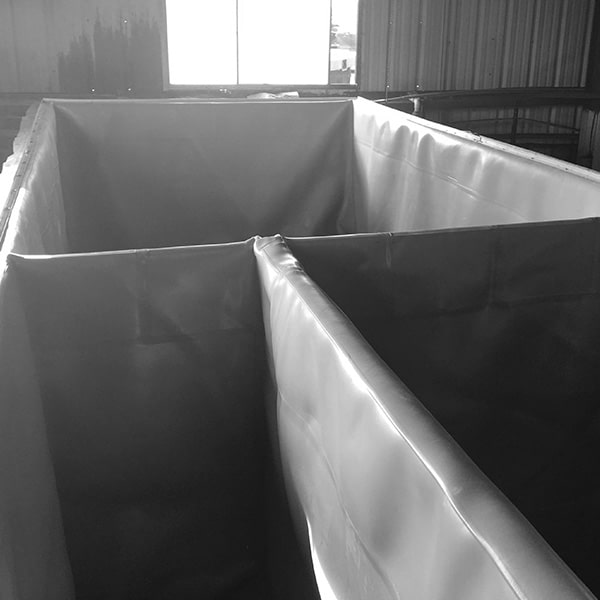
A berm is a raised barrier designed to surround a tank, storage area, or other potential source of a spill.
Materials such as concrete, compacted soil, or other engineered materials can be used to construct berms. Their primary purpose is to create a defined area where a release can collect.
Advantages of Bermed Containment
Incorporating berms into an industrial site can be straightforward when tanks or storage equipment are grouped in one location.
They can also provide substantial containment volume without requiring a completely enclosed structure.
A liner installed across the bermed area can provide an additional impermeable barrier, helping prevent the contained material from migrating through cracks, porous surfaces, or the surrounding soil.
Potential Challenges with Berms
Berms require adequate space around the equipment being protected. Outdoor berms also need to account for rainfall and drainage.
Existing berms may develop:
- Cracks
- Settlement
- Erosion
- Vegetation growth
- Deteriorated surfaces
- Areas of inadequate permeability
A liner can address some of these surface-related concerns, but the underlying berm still needs to be appropriate for the application.
Quality-First Manufacturing
We manufacture each one of our liners with the strongest materials, resulting in a longer lifespan. The liner itself is strong enough to protect the container, while being resistant to chemical corrosion. Providing a complete solution for a variety of industries.
Dikes as Secondary Containment
Dikes perform a similar function to berms by creating a barrier around tanks or other storage areas.
The terminology can overlap, but dikes are often associated with more substantial engineered containment structures around industrial tank farms.
Diked areas can be constructed from concrete, steel, masonry, compacted soil, or combinations of materials.
Advantages of Diked Containment
Diked containment can provide substantial storage capacity and serves to protect large tanks or multiple containers.
A well-designed dike can also integrate with existing industrial infrastructure, drainage controls, collection points, and access areas.
Why Dikes May Need Liners
An older concrete dike may remain structurally sound while developing cracks, porous areas, or deteriorated joints.
Rebuilding the entire containment structure may be unnecessary if the underlying structure remains usable.
A flexible liner can provide a new containment barrier across the floor and walls of the diked area. This can allow the facility to retain existing infrastructure while addressing concerns about liquid migration.
Earthen Pits as Secondary Containment
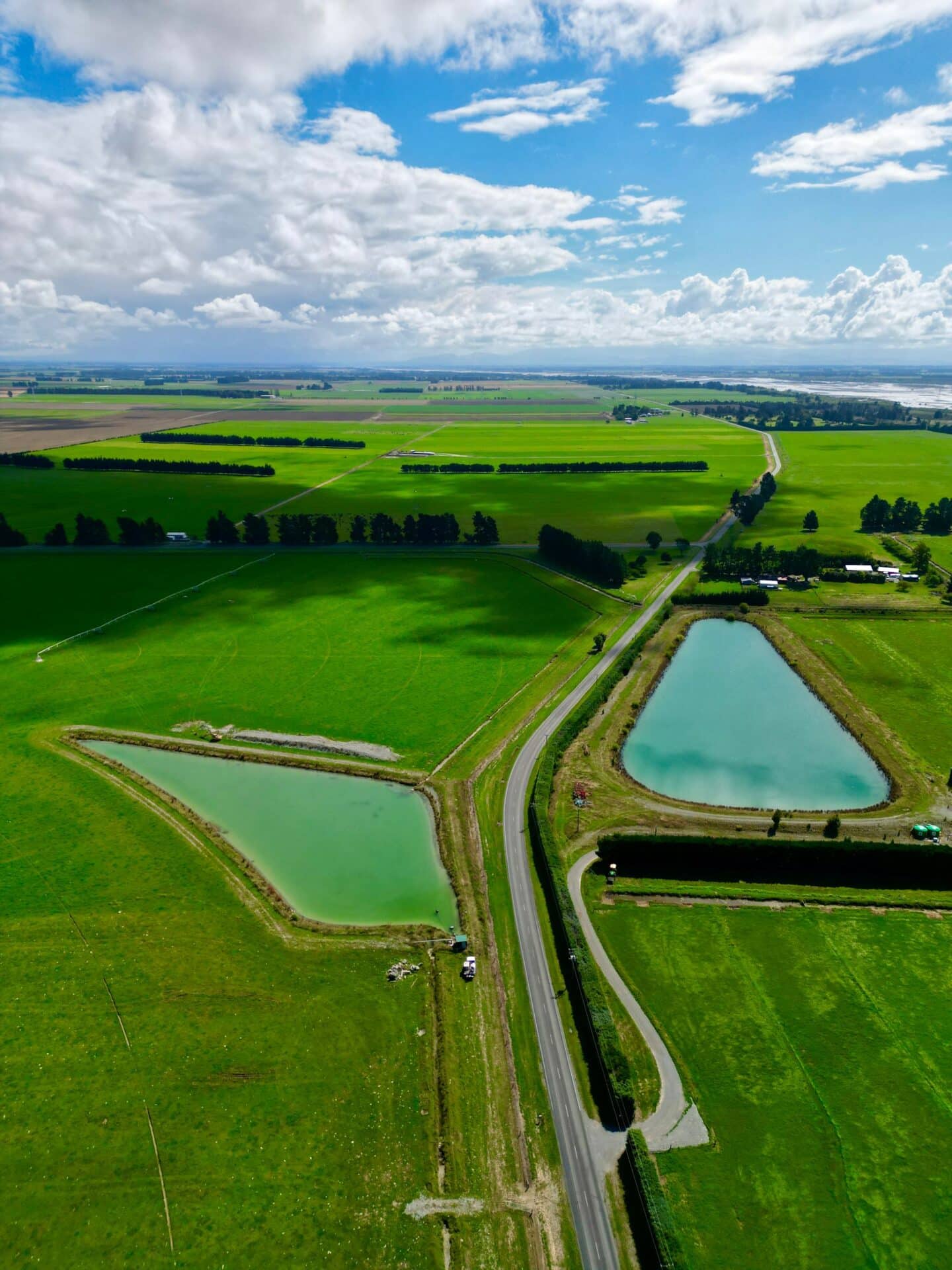
Earthen pits use excavated or naturally depressed areas to collect and contain liquids.
They can be useful for large-scale containment applications where constructing a conventional concrete structure would be impractical.
However, soil itself is not an adequate containment barrier.
Why Soil Type Matters
The permeability of the native soil plays an important role in determining whether an earthen containment area can consistently retain liquids.
Clay-rich soils can provide low permeability when properly compacted. Sandy or gravelly soils allow water and other liquids to move much more easily.
This creates an important distinction between holding liquid and containing liquid.
An earthen pit may hold a release for a short time while still allowing contaminants to migrate through the soil.
Lining an Earthen Pit
A flexible liner can create a continuous containment barrier across an earthen pit.
Before installation, workers should prepare the site to protect the liner from punctures, excessive stress, and other forms of damage.
Depending on the project, the liner may extend across the bottom and up the sides of the pit, with appropriate anchoring around the perimeter.
This approach can turn an otherwise permeable excavation into a more reliable containment structure.
Berms vs. Dikes vs. Earthen Pits
Each containment approach can be useful, but the right choice depends heavily on the facility and its existing infrastructure.
Berms
Best suited for: Tank groups, storage areas, and facilities with available space for raised containment.
Potential advantages:
- Straightforward design
- Can be incorporated around existing equipment
- Can provide substantial containment volume
- Can be lined to improve liquid retention
Potential considerations:
- Requires surrounding space
- Must account for precipitation
- Existing structures may require repairs before lining
Earthen Pits
Best suited for: Large containment areas where excavation is practical.
Potential advantages:
- Can accommodate large volumes
- Uses the existing terrain or excavation
- Can be economical for large areas
- Flexible liner systems can provide a reliable containment barrier
Potential considerations:
- Native soils may be highly permeable
- Liner protection and anchoring are important
- Erosion and settlement can affect the installation
- Access for inspection and maintenance should be considered
Dikes
Best suited for: Large industrial tanks and established tank farms.
Potential advantages:
- High containment capacity
- Can integrate with existing industrial infrastructure
- Suitable for large storage areas
- Can often be rehabilitated rather than completely rebuilt
Potential considerations:
- More substantial construction
- Cracks and deteriorated joints can compromise containment
- Drainage and access require careful planning

What Type of Liner Should Be Used?
Choosing the containment structure is only one part of the decision. The liner itself needs to be selected based on the conditions it will encounter.
Chemical Compatibility
The liner must be compatible with the material being stored.
A liner suitable for water containment may not be appropriate for petroleum products, fertilizers, solvents, or industrial chemicals.
Learn more about our chemical tank liners.
UV Exposure
Outdoor containment systems may receive years of direct sunlight.
If the liner stays exposed, consider its resistance to ultraviolet degradation during material selection.

Temperature
Operating and environmental temperatures can affect liner performance.
You should select the liner based on the expected temperature range rather than just the average conditions at the site.
Physical Durability
Containment liners may face exposure to equipment, debris, foot traffic, weather, and various mechanical stress sources.
The liner thickness and construction should be appropriate for the expected conditions.
Seam Construction
Large containment areas frequently require multiple sections of liner to be joined.
Seam quality is therefore an important consideration. Factory-fabricated and RF-welded seams can provide consistent construction under controlled manufacturing conditions.
Should You Line an Existing Containment Structure?
A containment structure with a deteriorated surface does not always need to be demolished.
Sometimes, the existing structure can provide the structural support while a new liner provides the containment barrier.
This can be useful when:
- The structure remains structurally sound
- Cracks or surface deterioration are present
- The existing containment dimensions are adequate
- Rebuilding would create significant downtime
- The facility wants to improve containment without major reconstruction
An inspection can help determine whether lining is practical or whether more extensive structural repairs are necessary.
What Should Be Considered Before Installing a Secondary Containment Liner?
A successful liner installation starts with understanding the existing site.
Before installation, consider:
- The dimensions and condition of the containment area
- The material being contained
- Required containment volume
- Precipitation and drainage
- Soil conditions
- Existing cracks or structural damage
- Potential puncture hazards
- Liner anchoring
- Access for installation and future inspection
- Applicable regulatory requirements
These factors can influence both the liner material and how the system is fabricated and installed.
Frequently Asked Questions
Can you add secondary containment to a berm?
Yes. You can install flexible liners across suitable bermed containment areas to create a barrier between the contained material and the underlying surface. First, evaluate the berm for structural condition, dimensions, drainage, and other installation requirements.
Can you line an existing concrete dike?
Many times, yes. If the existing dike remains structurally suitable, a flexible liner might be installed across the floor and walls to provide an additional containment barrier without completely rebuilding the structure.
Does an earthen containment pit need a liner?
Not every earthen pit requires a liner, but highly permeable soils can allow contained liquids to migrate into the surrounding ground. A well-selected liner can provide a more reliable containment barrier when native soil does not offer sufficient resistance to seepage.
How long does a secondary containment liner last?
Lifespan depends on the liner material, chemical exposure, UV exposure, temperature, physical conditions, installation quality, and maintenance. Properly selected and installed liners can provide long-term service, but the expected lifespan should be evaluated for the specific application.
What is the best liner for secondary containment?
There is no single liner material that is appropriate for every application. Chemical compatibility, temperature, UV exposure, physical conditions, containment size, and regulatory requirements should all be considered when selecting a liner.
Can you install a liner without replacing the entire containment structure?
Often, yes. If the existing berm, dike, or pit is structurally suitable, a liner may allow the facility to improve its containment barrier without completely reconstructing the existing structure.

Strengthen Your Existing Secondary Containment
Berms, dikes, and earthen pits can all provide valuable secondary containment, but the structure itself is only part of the system. Where concrete has deteriorated or native soil is too permeable, a properly selected liner can provide an additional barrier against leaks and migration.
Fab-Seal specializes in custom-fabricated PVC liner systems for industrial containment applications. We can design and manufacture liners for berms, dikes, pits, tanks, ponds, and other structures where reliable liquid containment is important.
If you’re evaluating an existing containment area or planning a new system, Fab-Seal can help you determine whether a custom liner is appropriate for the application and develop a solution around the site’s specific requirements.
Call (800) 874-0166 or fill out our form to discuss your secondary containment project and explore options for lining an existing or new containment structure.
Get Started!
Contact us today and learn how our custom-fabricated liners are the ideal solution for most containment applications!